Archives

Qigong State and Five Animal Frolics Presentation at AHNA Convention

The Qigong State and Five Animal Frolics medical Qigong were part of the Qigong credit courses that we taught to holistic nurses at their annual convention this year. All forms of higher cultivation including meditation and Qigong benefit from the Qigong state.

This video introduces you to the Qigong state and the Five Animal Frolics form (the Tiger, Deer and Bear are shown). The full form, along with several other forms, can be found on our Qigong practice DVD available at http://www.filmbaby.com/films/4744

Share and Enjoy:
  • Print
  • Digg
  • Sphinn
  • del.icio.us
  • Facebook
  • Mixx
  • Google Bookmarks
  • Blogplay
  • LinkedIn
  • MySpace

Dragon and Tiger Kung Fu

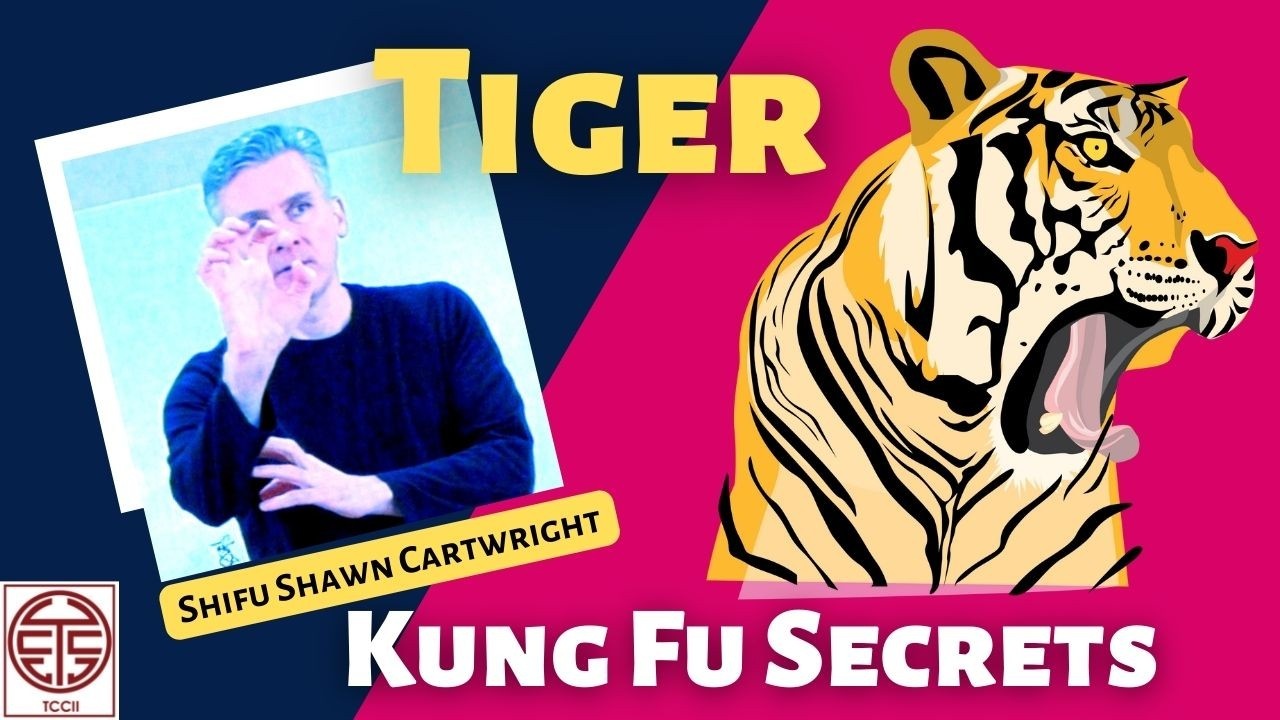
The Dragon and Tiger have long been totems of internal Kung Fu and symbols of Taoist internal cultivation. The highest levels of internal Kung Fu provide an entry point to Internal Alchemy (Nei Dan) cultivation. Here is a video of Dragon and Tiger free movement performed by Mr. Shawn Cartwright, TCCII Executive Director. It was filmed at a Taoist temple on Wei Bao Shan, in Yunnan China.

In Internal Alchemy, the Dragon (Long) represents fire and the Tiger (Hu) represents water. In internal Kung Fu, the Dragon appears soft and subtle, the Tiger hard and ferocious. At first it seems as if the two interpretations are opposites. But to those initiated into the higher mysteries, the meaning is the same.

Can you find the harmony in the Dragon and Tiger? If so, then perhaps you are natural cultivator!

Share and Enjoy:
  • Print
  • Digg
  • Sphinn
  • del.icio.us
  • Facebook
  • Mixx
  • Google Bookmarks
  • Blogplay
  • LinkedIn
  • MySpace

Chen Tai Chi Yi Lu Form by Shawn Cartwright

For every Yin there is a Yang. In this case, the Yang is the Chen Tai Chi Form performed by Mr. Shawn Cartwright, Executive Director of TCCII. This form shows the obvious hard and soft, fast and slow movement of the original style of Tai Chi Chuan. Mr. Cartwright is a 20th generation Chen Tai Chi lineage disciple of Grandmaster Chen Quanzhong, the most senior of the Chen grandmasters. Although a meditative state is also required to properly execute this form, it is different from the Yang 24 form. The variations in style are important and the reason why many of the great teachers learn more than one style of Chinese internal Kung Fu!

The music featured on this video is “Spring Comes to the Snowy Mountain” from the “Rising Moon” Guzheng CD, by Bing Xia Available http://www.cdbaby.com/cd/BingXia

Share and Enjoy:
  • Print
  • Digg
  • Sphinn
  • del.icio.us
  • Facebook
  • Mixx
  • Google Bookmarks
  • Blogplay
  • LinkedIn
  • MySpace

Ba Gua and Xing Yi on a sacred Taoist Mountain in China

Bagua and Xingyi (Pa Kua and Hsing I) are two of the most famous Chinese internal Kung Fu systems (after Tai Chi Chuan.) Bagua is generally based upon the eight trigrams of the Yi Jing (I Ching) while Xingyi is based upon the Wuxing (Wu Hsing) five element theory. Here is a demonstration of Xingyi’s metal, wood, and fire element as well as Bagua’s circle walking with Tiger hand position. The order of the techniques shown in the video is: metal, wood, circle walking, fire.

The video was filmed on Wei Bao Shan, one of the oldest and most respected Taoist (Daoist) mountains in China. This mountain is located in a remote area of Yunnan province. It has not seen much foreign tourism. Although the government is restoring the various temples on the mountain, they have been neglected for many years. What was once a major Taoist center now only has a few priests remaining. We were lucky enough to meet one of them on our recent visit to China.

Share and Enjoy:
  • Print
  • Digg
  • Sphinn
  • del.icio.us
  • Facebook
  • Mixx
  • Google Bookmarks
  • Blogplay
  • LinkedIn
  • MySpace

Yang Tai Chi 24 Form by Dr. Yinong Chong

Here is a selection from the Yang Tai Chi 24 movement form performed by our very own Dr. Yinong Chong, Executive Director of TCCII. The Yang 24 can be very “Yin” or meditative when performed as Dr. Chong demonstrates. The Yang 24 form is a good choice for those just beginning Tai Chi who wish to focus on health and meditation.

Share and Enjoy:
  • Print
  • Digg
  • Sphinn
  • del.icio.us
  • Facebook
  • Mixx
  • Google Bookmarks
  • Blogplay
  • LinkedIn
  • MySpace

Behind the Scenes Tour of a TCM Pharmacy in China

On our recent China adventure, we took a group behind the scenes in a real traditional Chinese medicine pharmacy in China. They got to see exactly how the herbal prescriptions were filled and were introduced to a bewildering array of traditional Chinese medicine herbs.

This short video gives you an idea of what it is like inside a busy TCM pharmacy.

Share and Enjoy:
  • Print
  • Digg
  • Sphinn
  • del.icio.us
  • Facebook
  • Mixx
  • Google Bookmarks
  • Blogplay
  • LinkedIn
  • MySpace

Turtle Qigong in the Forbidden City

We did Qigong in Jing Shan park, part of the Forbidden City on recent China trip. While there we saw this old man doing Turtle Walking Qigong and filmed video of his practice.

The turtle is revered in China by the Taoists for its longevity. Several forms of Qigong and breathing are patterned upon the turtle. Wudang Five Animal Qigong includes an entire turtle sequence.

The man’s movement was quite impressive, considering his age and that he did Turtle Walking all over the park, including up and down hills. Can you do it?

Share and Enjoy:
  • Print
  • Digg
  • Sphinn
  • del.icio.us
  • Facebook
  • Mixx
  • Google Bookmarks
  • Blogplay
  • LinkedIn
  • MySpace

Summer Solstice Qigong

Today is the Summer Solstice. This is the time of maximum Yang, when the first seed of Yin begins to regenerate. Like the Winter Solstice and the Spring and Autumn Equinox, it is an important time for Qigong and Internal Alchemy practitioners.

Today is a day you will reap great benefits from your practice. Spend as much time meditating and doing Qigong as possible. Even the benefits of acupuncture and moxibustion are enhanced today.

Share and Enjoy:
  • Print
  • Digg
  • Sphinn
  • del.icio.us
  • Facebook
  • Mixx
  • Google Bookmarks
  • Blogplay
  • LinkedIn
  • MySpace

Ignorant Peasants

One phrase you might occasionally hear in China is “Wu Zhi Nong Min” or “Ignorant Peasants”. This phrase has two meanings. The first and older one is used to refer those people, usually farmers, who have very little formal education and lack the inclination to view things in a larger perspective. They do not understand things outside their narrow world view.

I recall coming across this phrase when talking to one of my Feng Shui teachers, a highly educated professor of psychology who also happens to be a 22th generation family lineage Feng Shui and Yi Jing master. This school of Feng Shui uses the Chinese Lo Pan, or geomantic compass and the Yi Jing to determine the Feng Shui of a location. The Lo Pan is itself extremely complex, requiring considerable training and education to use.

I asked him about the differences between his school of Feng Shui and another more popular one that is much less complicated. For example, instead of calculating the direction of the front door and then deriving the Yi Jing directional correspondences, the popular school simply says, “open your front door, that is South.”

He said “That is ignorant peasant Feng Shui. They don’t have the proper education to use the complete method, so there is a simplified one for them to use.” His comment, though said humorously was not a put-down, but a statement of fact. He used “ignorant” in the sense of its original meaning.

The second way of using “ignorant peasants” is decidedly pejorative. In 1956, when schools and universities where closed on the mainland, leadership positions in government and industry where given to loyalists. These people no doubt fought bravely and supported the new government, but they were often former revolutionary farmers ill-trained for managing enterprises, that is, the poster children for “ignorant peasants.” Because their positions gave them power, they were feared, but they were not respected. People called them “ignorant peasants” behind their back. Eventually the term developed an extended usage as a put down, regardless of the actual competence of the individual.

I came across the use of the term as a put down when talking to a moderately famous (in China) Xing Yi practitioner. The question I asked him was “Why do some Xing Yi schools practice their five element fists in different orders?” His answer was “The fists should only be practiced in the generating cycle of the Wu Xing like we do it in our school. We have the original style of Xing Yi. Probably the other schools that do it differently were founded by ignorant peasants who didn’t understand the five elements.”

When I meet another teacher of an art I already study, sometimes I will ask simple questions about well known differences between the various schools to gauge the person’s point of view and personality. In this case, although the teacher was a very nice person and very good at his style of Xing Yi, his views were pretty narrow minded.

There are valid reasons from both martial and Qigong perspectives to practice the five element fists in different orders (for example, you can practice them in the controlling cycle). If this teacher did not know of these other reasons, then he is ignorant. If he knew of them but disagreed, there really was no good reason to put the other schools down. Rather, he seemed to relish the opportunity to “Bian Di Bie Ren Tai Gao Zi Ji” to put others down in order to build his school up.

It is hard to keep a straight face when the person you are talking to tells you everyone else is wrong and he is the best because they are ignorant peasants. He was acting like an “ignorant peasant” in the original sense of the term.

However, we should resist the temptation to judge him too harshly. He may not even be even aware of what he’s doing. Instead we should learn from him – learn what not to do! What not to do is sometimes the best lesson we can learn from some people.

Learn not to be an “ignorant peasant.”

Share and Enjoy:
  • Print
  • Digg
  • Sphinn
  • del.icio.us
  • Facebook
  • Mixx
  • Google Bookmarks
  • Blogplay
  • LinkedIn
  • MySpace

One with Nature with the Holistic Nurses

We recently returned from the American Holistic Nursing Association’s (AHNA) annual conference. This year it was held in Colorado Spring, CO, a small town situated at the foothills of the Rocky Mountains. Although better known as the home of NORAD and several military bases, it also boasts some great hiking and mountain scenery worthy of a Taoist landscape painting. Even the view from the center of town was lovely. Pike’s Peak was the backdrop and you see the hills and mountains which ring the city.

We taught three professional continuing nursing education credit courses during the conference. The theme was on connecting with nature through Taoist Qigong practice. The nurses learned how to use meditation for healing the self and others. They also had a chance to practice the Five Animal Frolics medical Qigong, one of the oldest Qigong sets in existence and create specifically for healing. We met a lot of new people and reconnected with some old friends. The nurses are a very enthusiastic and cheerful group. We really enjoy working with them.

The AHNA approved our Qigong certification course for professional continuing education credit. Any nurse can take our approved classes and receive CNE credit. Non-nurses will receive credit towards their medical Qigong certification.

Share and Enjoy:
  • Print
  • Digg
  • Sphinn
  • del.icio.us
  • Facebook
  • Mixx
  • Google Bookmarks
  • Blogplay
  • LinkedIn
  • MySpace